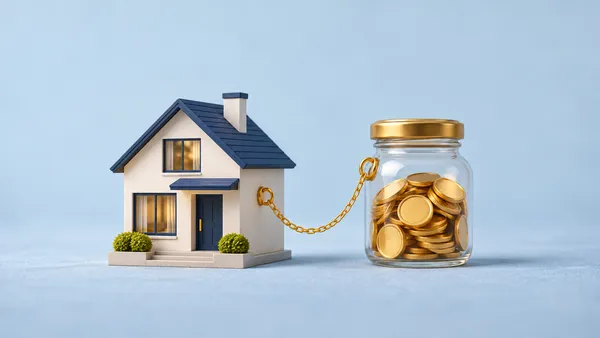

Every home buyer reaches the same question before the loan is signed: how much should go in as down payment, and how much should be borrowed?
Many buyers put in every rupee they have. A smaller loan feels safer, and it is cheaper. Others put in only what the lender asks for and keep the rest in the bank. Cash in hand feels safer too.
Both choices have a cost. A bigger down payment means a smaller loan, a smaller EMI and less interest over the years. A smaller down payment keeps money available for emergencies, interiors and the many costs that come with a new home.
This article shows the maths of both choices on one home, and a third way that gives you some of the benefit of each. Where a prepayment appears in the examples, it is a prepayment made at the end of the year, EMI unchanged.
The two usual choices
Take a home that costs ₹65 lakh. Lenders fund only part of a home's value, so every buyer pays a share of it from their own pocket. Above that minimum, the split is your choice.
Two common ways to buy this home:
- Option A: put ₹15 lakh down and borrow ₹50 lakh.
- Option B: put ₹25 lakh down and borrow ₹40 lakh.
The difference is ₹10 lakh of your own money. Option B uses it upfront. Option A keeps it in your account.
What the bigger down payment does
Here is Option A, the bigger loan:
On a ₹50 lakh loan at 7.5% (example rate) over 20 years, the EMI is about ₹40,280 and total interest is about ₹46.67 lakh.
And here is Option B, the bigger down payment:
On a ₹40 lakh loan at 7.5% (example rate) over 20 years, the EMI is about ₹32,224 and total interest is about ₹37.34 lakh.
The extra ₹10 lakh paid upfront lowers the EMI every single month for 20 years, and it removes a large part of the total interest. The reason is simple: money you never borrow never collects interest. Every rupee of the down payment works for the whole life of the loan.
A lower EMI also gives breathing room. If income drops, a job changes or a second child arrives, a smaller monthly commitment is easier to carry.
What the bigger down payment costs you
The case for putting more down is strong on paper. But once the money goes into the property, it is locked in. Getting it back means a top-up loan or selling the home. That matters in a few common situations.
- No emergency fund left. A medical bill, a job gap or a family need can arrive in the first year as easily as in the tenth. Without cash aside, the only options are expensive ones such as a personal loan or a credit card.
- The costs of moving in. Stamp duty and registration are usually paid from your own pocket, and many lenders do not fund them. Interiors, furniture, appliances and society deposits come on top. Buyers who empty their savings for the down payment often end up borrowing again for these.
- The first years are the uncertain ones. A new EMI, a new home and sometimes a new city all arrive together. Cash in hand during this period is worth more than it looks.
So the question is not only "which option costs less interest?" It is also "which option leaves the household safe?"
The third way: borrow more, keep the cash, prepay later
There is a middle path that many buyers miss. Take Option A, the bigger loan, but do not spend the ₹10 lakh. Keep it aside for the uncertain first years. Then, once the emergency fund is in place and the home is set up, use it as a prepayment.
Here is what that looks like if the ₹10 lakh goes in at the end of year 2:
On a ₹50 lakh loan at 7.5% (example rate) over 20 years, a ₹10 lakh prepayment at the end of year 2, with the EMI unchanged, saves about ₹20.22 lakh in interest and cuts the tenure by 6 years and 3 months.
On a ₹50 lakh loan at 7.5% (example rate) over 20 years, a ₹10 lakh prepayment at the end of year 2, with the EMI unchanged, brings total interest down to about ₹26.45 lakh.
That total is lower than in Option B. It is important to understand why, because it is not that borrowing more is cheaper. In this third way, the EMI stays at the higher Option A level after the prepayment. Paying the larger EMI every month is what closes the loan years earlier. Option B gives a lower EMI and more monthly breathing room; the third way asks you to keep paying the larger EMI in return for keeping the cash flexible.
The third way works only with discipline. Money kept "for prepayment later" has a habit of being spent on a car, a holiday or a renovation. If the cash is unlikely to survive two years untouched, the bigger down payment is the safer choice.
Where to keep the cash while it waits
If you take the third way, where the ₹10 lakh sits for those two years matters.
- An OD home loan: some lenders offer a home loan with an overdraft account attached. Money kept in that account reduces the interest charged on the loan every day, and it can still be withdrawn in an emergency. This is often the best home for cash that is waiting to become a prepayment. See OD Home Loan: Close Your Loan Years Early Without Extra EMI.
- A sweep or fixed deposit: if an OD home loan is not available, a deposit that can be broken quickly keeps the money safe and separate from day-to-day spending.
Avoid parking this money in anything that can fall in value just when you need it, or that locks it away for years.
When the time comes to prepay, there is one more point in your favour. RBI rules do not allow regulated lenders to charge an individual a prepayment or foreclosure charge on a floating-rate home loan taken for a non-business purpose. If your loan is fixed-rate, or still in a fixed-rate period, check your loan agreement before you prepay.
How to decide
Ask yourself these questions before you sign:
- Will there be at least six months of household expenses left after the down payment? If not, keep more cash and borrow a little more.
- Are the moving-in costs covered? Add up stamp duty, registration, interiors and deposits first. Put down what is left after those, not before.
- Is the bigger EMI comfortable? If the Option A EMI would stretch the monthly budget, the bigger down payment is the better choice.
- Can the cash stay untouched for two years? If yes, the third way gives you safety now and a large interest cut later. If not, put it into the down payment.
- Does your lender offer an OD home loan? If yes, the third way becomes even more attractive, because the waiting cash cuts interest from day one.
The bottom line
A bigger down payment is the simplest way to pay less interest: less borrowed, a lower EMI and less interest for the life of the loan. But it should never leave the household without a safety net.
For buyers who want both safety and a fast finish, the third way is worth a serious look: borrow a little more, keep the cash safe for the uncertain first years, then prepay it and keep the EMI unchanged.
The right split depends on your income, your savings and your plans. If you would like help working out the numbers for your own home, message Home Loan Freedom on WhatsApp at +91 75583 33238.